Do solar panels damage your roof? It is one of the first questions homeowners ask, and a clear answer builds trust from the first visit. The honest answer is that it depends on how the system is attached and how the crew works on the roof.
This guide covers where roof problems can start, how TRT systems attach to shingle and tile roofs, and what to tell the homeowner.
Where Roof Problems Can Start
When homeowners ask, “do solar panels damage my roof”, they are really asking about the installation. A few areas decide the outcome.
Attachment Points
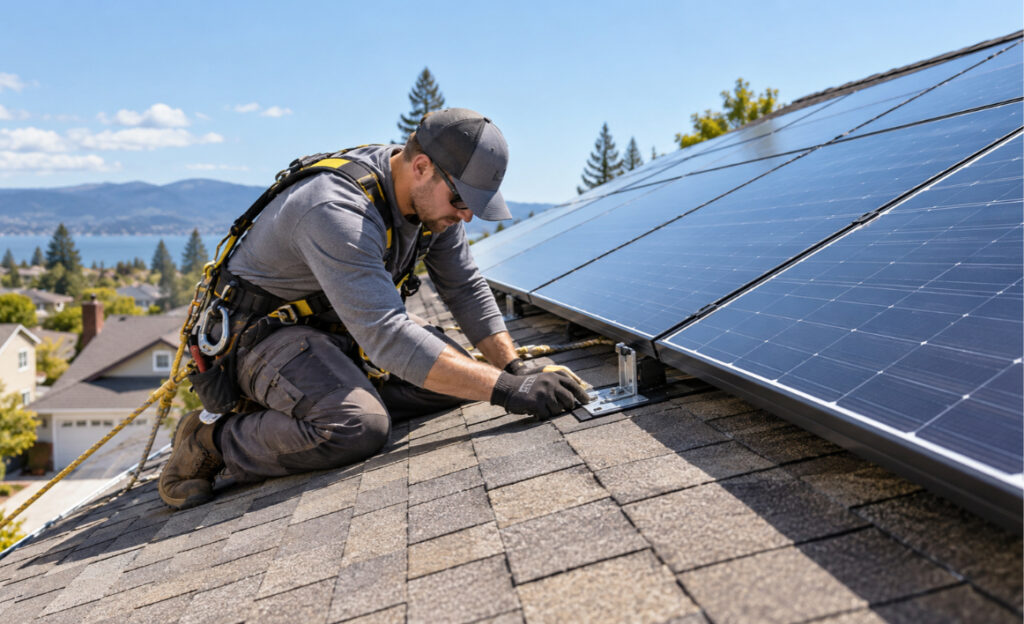
Every point where mounting hardware meets the roof must stay watertight for the life of the system. That is why the attachment method matters so much. Use a system built for the specific roof type and install it exactly as the manufacturer instructs.
Roof Condition Before Install
Check the roof before you design the array. If the roof is near the end of its life, the homeowner may need to replace it soon after the solar goes on.
On shingle roofs, attachments should only go on shingles that are in good condition. Walk the roof and look for:
- Curling shingles
- Cracked shingles
- Granule loss
- Signs of advanced age
The U.S. Department of Energy points out that replacing the roof and adding solar at the same time avoids having the panels reinstalled after a roof replacement. Raise this early so the homeowner can plan both projects together.
Crew Handling on the Roof
Foot traffic and material handling also matter. Plan walking paths, set materials down carefully, and brief the crew before they go up, especially on tile roofs where tiles can crack underfoot.
Documentation
Photograph the roof before work starts and document each attachment as you install it. These photos protect you and the homeowner if a question comes up later, and they give inspectors a clear record of the work.
Protecting Composition Shingle Roofs with TRT01 and TRT02
For asphalt composition shingle roofs, TRT offers a rail-less system and a rail-based system. Both are built specifically for shingle roofs and use butyl adhesive at the roof attachment.
TRT01 Rail-Less Base System
The TRT01 Rail-Less Base System is built specifically for asphalt composition shingle roofs. It integrates the base and mini rail into a single unit. The base uses butyl sealing together with the specified mechanical fasteners and is installed according to the TRT01 installation instructions.TRT01 Rail-Less Base System
TRT01 is UL 2703 listed and PE certified, with Class A/B fire-test compatibility under the tested configurations. TRT01 has also been tested in accordance with ASTM D7147 and TAS 100(A)-23 under the conditions described in the applicable test reports. TRT backs it with a 25-year warranty.
TRT02 Rail Base System
TRT02 is a rail-based system built for composition shingle roofs. It replaces the traditional L-foot design with a cast aluminum base that uses butyl sealing together with the specified mechanical fasteners.
Wire management is integrated into the rail cavity. TRT02 is UL 2703 listed and PE certified, with Class A/B fire-test compatibility under the tested configurations. TRT backs TRT02 with a 25-year warranty. For a deeper look at how these bases work on shingles, read our post on how asphalt roofs handle solar loads without damage. how asphalt roofs handle solar loads without damage
Protecting Tile Roofs with TRT03
Tile roofs need a different approach than shingles. The TRT03 Tile Hook System, including TRT031, TRT032 and TRT033 configurations, is built specifically for tile roofs and accommodates flat tiles, S tiles and W tiles.
TRT03 uses stainless-steel tile hooks with aluminum rails and the specified mechanical fasteners. It is UL 2703 listed and PE certified. TRT backs the TRT03 system with a 25-year warranty.
The right hook depends on the tile profile, so confirm it during the site survey. Our guide to choosing tile hooks for S, W and flat tiles walks through the selection.
Engineering, Layout and What to Tell the Homeowner
Attachment layout is an engineering decision, not a guess. Before you finalize the design, check the applicable TRT engineering and span documentation for your system and site conditions, and comply with project-specific engineering and AHJ requirements. Keep the product datasheet, installation manual and applicable engineering or span documents with the permit package so reviewers have the relevant system information. TRT’s PE-certified span tables
Roofing partners and inspectors may also reference industry guidance. The National Roofing Contractors Association (NRCA) publishes guidelines for rooftop-mounted photovoltaic systems, including applicable code requirements.
When a homeowner asks whether solar will ruin their roof, give them a clear answer built on three points:
- You check the roof condition before designing the system
- You use a mounting system built for their roof type, installed per the manufacturer’s instructions
- Your layout follows PE-certified engineering documents
That answer gives the homeowner confidence in your proposal. Explore the TRT01 Rail-Less Base System or contact the TRT team at Info@TopRackTech.com for datasheets and installation manuals.
Frequently Asked Questions
Do solar panels damage my roof?
The risk depends on the attachment and the installation. Using a mounting system built for the roof type, following the manufacturer’s installation instructions and engineering documents, and checking the roof condition first are the key steps.
Should you replace an old roof before installing solar?
If the roof is near the end of its life, it is worth discussing replacement first. The U.S. Department of Energy notes that doing both at the same time avoids having the panels reinstalled after a roof replacement.
How does TRT01 attach to a shingle roof?
TRT01 is built for asphalt composition shingle roofs. It integrates the base and mini rail into a single unit. The base uses butyl sealing together with the specified mechanical fasteners and is installed according to the TRT01 installation instructions.