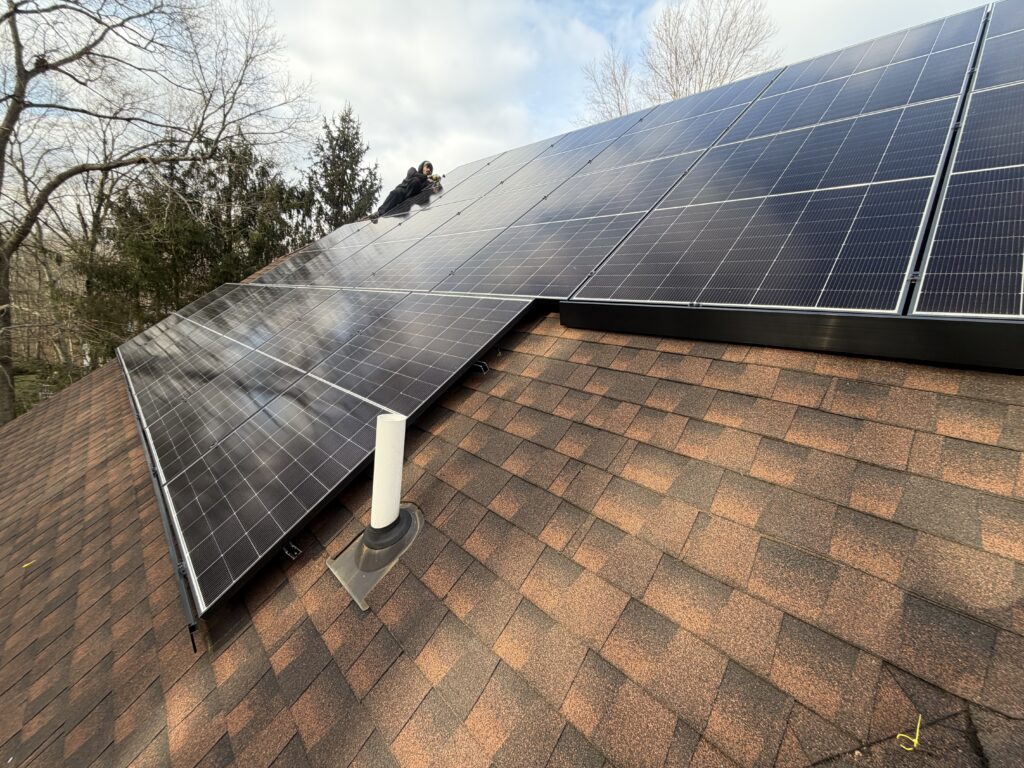
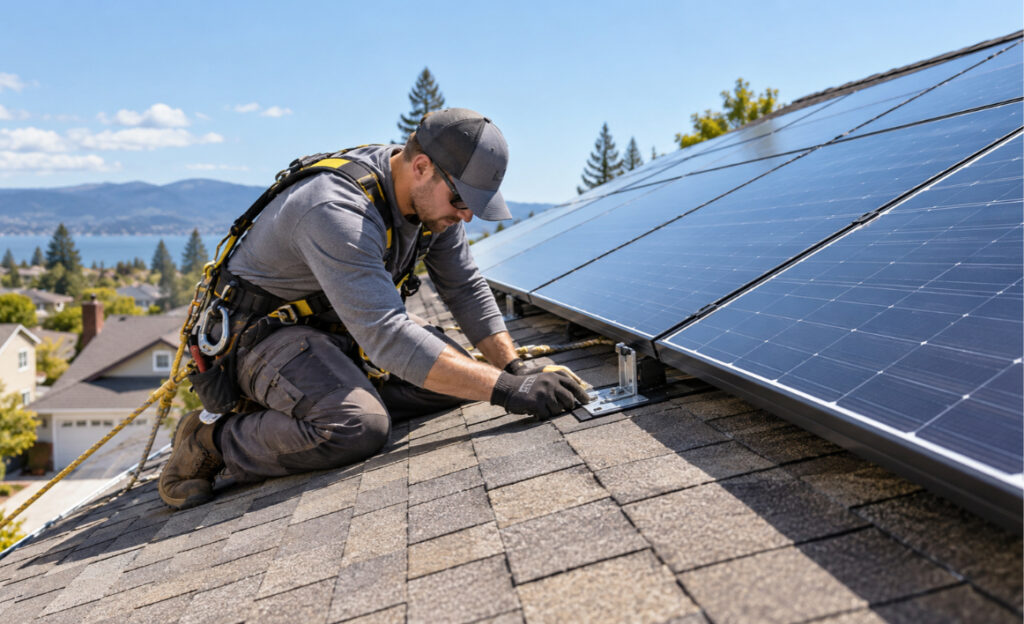
Asphalt roofs can carry residential solar arrays safely when the mounting hardware is designed for the material and installed correctly.
The right asphalt roof solar mounting solution maintains shingle integrity, manages mechanical loads, and avoids the leaks or uplift issues many installers worry about. Here’s how asphalt roofing actually behaves under solar loads, and why modern mounting systems make it a reliable surface for long-term PV.
| TL;DRAn asphalt roof solar mounting solution can safely carry solar loads when mounts are tied into structural members and sealed with compatible (non-silicone) roofing materials.This follows ASCE 7 structural load requirements, which direct gravity, wind, and snow loads into the framing, not the shingles. TRT’s bonded bases protect shingles long term without flashing or pilot holes, as long as installers follow stamped calcs, span tables, and AHJ-approved methods. |
Why Asphalt Roofs Are Well-Suited for Solar Mounting
Asphalt shingles remain the most common roofing type in the U.S., which makes them a frequent surface for PV installations. Their layered composition, granulated surface, and standardized manufacturing give installers predictable behavior under mechanical attachment.
Shingles themselves are not load-bearing; instead, the load travels through the mount’s fastener into the roof deck and structural members. When the mounting system is engineered for this pathway, shingles experience minimal stress.
Because ASCE load requirements apply to the structural members, not the shingles, the roof covering plays a protective role, not a structural one. This is why certified mounting systems (like TRT’s rail and rail-less comp-shingle hardware) focus on mechanical connection, water resistance, and long-term compatibility rather than forcing shingles to carry direct loads.
Another reason asphalt roofs perform well: they rarely require structural modifications when stamped calculations show compliance. This gives project managers predictable workflows, fewer change orders, and minimal disruption to homeowners.
For crews who want a closer look at how comp-shingle attachments behave in the field, our composition shingle solar mounting best practices article walks through the methods step by step.
How Solar Loads Travel Through Asphalt Roofing
Understanding load behavior helps installers and inspectors see why asphalt shingles remain reliable under PV arrays.
1. Vertical Loads (Dead Load + Snow Load)
Solar panels, rails, and hardware add dead load. Snow adds temporary weight. According to ASCE guidance, these loads transfer directly through the mounts into the roof sheathing and then into the rafters or trusses.
Asphalt shingles are essentially bypassed. They simply cover and protect the penetrated area.
2. Uplift and Wind Loads
Wind uplift is often an AHJ’s biggest concern. Modern bonded bases and engineered fasteners provide the compression and shear resistance needed to meet uplift requirements. Shingles are not relied upon to resist uplift forces; they flex under wind but the attachment is locked into the structure.
If your team wants more context on how uplift and lateral forces shape rooftop hardware choices, our solar mounting wind load design overview breaks down the key considerations.
3. Thermal Cycling
Asphalt roofing expands and contracts with temperature swings. Properly designed bases accommodate this movement without stressing the shingle.
For TRT hardware, the bonded base design maintains stable compression while allowing minor independent movement between layers, helping installers avoid shingle cracking or seal failure.
4. Water Intrusion Risks
When mounts use compatible butyl sealing, shingles maintain their weatherproofing functions. Because TRT 01 and TRT 02 do not require flashing, installers avoid unnecessary shingle disruption and reduce the number of components that must move harmonically with the roof.
Why TRT 01 and TRT 02 Protect Asphalt Shingles Better Than Traditional Methods
Installers have long worried that solar attachments could compromise shingle performance. The design decisions behind TRT’s comp-shingle hardware address these concerns directly.
1. No Flashing Required
Traditional flashing can create uplift points or disturb shingle layers during install. TRT’s bonded base design eliminates the need for sheet-metal flashing while still providing AHJ-friendly water resistance.
2. No Pilot Holes
Some legacy methods instruct installers to drill pilot holes, a step that often causes installers to over-drill, hit gaps in the decking, or compress surrounding shingle layers.
TRT01 and TRT02 do not require pilot holes. Installers drive the fastener directly, which speeds installation and reduces the risk of shingle fragmentation.
3. No Silicone Sealant
Silicone is incompatible with the butyl used in TRT bases. TRT hardware must only use roofing-compatible sealants excluded from silicone formulas.
This ensures proper bonding, long-term flexibility, and resistance to temperature cycling.
4. Bonded Bases Prevent Shingle Disturbance
Because the base sits flush against the roofing surface with controlled butyl compression, shingles aren’t torqued, warped, or pulled. This avoids displacement of granules or premature wear, common issues in other mounting solutions.
5. The System Avoids Engineering Liability
The hardware is engineered, tested, and supported by span tables and stamped calculations from TRT’s internal PE partners. The installer is not required to calculate uplift, shear, or bending forces; they follow the tables and the stamped documentation provided.
This keeps field work procedural instead of engineering-driven.
How Installers Maintain Shingle Integrity During Solar Mounting
With the correct system, asphalt roofing is straightforward to work on. The key is consistency, proper fastener placement, and using only compatible materials.
1. Confirm Shingle Condition Before Attaching
Solar attachments should only be installed on shingles that are in good condition, no curling, cracking, granule loss, or advanced age. Replacements should be handled by a roofer before the project begins. If a homeowner raises concerns during this check, our guide on whether solar panels damage your roof gives you a clear, installer-ready answer.
2. Identify Rafter Location
As with any comp-shingle solar mount, structural attachment matters more than shingle position. Rafters should be located using:
- Roof plan measurements
- Attic access (when available)
- Electronic stud finders
- Layout confirmation based on typical framing patterns
This ensures fasteners engage structural members with the embedment depth required in TRT’s span tables.
3. Drive the Fastener to Specified Torque
Over-torquing can compress shingles excessively; under-torquing can reduce pull-out capacity. Fasteners should be driven consistently according to TRT guidelines for the applied product.
4. Use only Approved Sealants
Butyl around the base activates with compression. Any supplemental roofing-compatible sealants must not include silicone. This is essential for ensuring watertight performance.
5. Keep Penetrations Limited and Consistent
A uniform pattern across the array distributes loads evenly and meets inspector expectations during walk-throughs.
When installers apply these best practices, asphalt shingles remain fully functional with minimal disturbance.
How Bonded Bases Prevent Leaks Without Flashing
TRT mounts are built around a simple premise: water follows gravity. If the material beneath the shingles remains sealed and stable, water will shed naturally without relying on metal flashing.
1. Compressed Butyl = Primary Seal
The butyl layer forms a reliable seal when compressed against the shingle surface. Over time, the butyl remains flexible, preserving its bond even through thermal cycles.
2. Shingles Overlap to Divert Water
Asphalt shingles are designed to shed water. When the mount respects the shingle’s natural structure, water continues its downward path without interference.
3. Fewer Components = Fewer Failure Points
No flashing means no misaligned metal edges, no tears, and no need for installers to lift or slide shingles. The mount sits exactly where it’s placed.
4. AHJ-Friendly Without Extra Roof Work
Because ASCE requirements focus on structural connection and water management, not shingle-by-shingle flashing requirements, inspectors view bonded bases favorably when installed per manufacturer instructions.
Compatibility, Lifespan, and Warranty Considerations
Solar arrays last 25-30 years, which means the mounting hardware must match or exceed that performance without compromising roofing warranties.
1. Asphalt Roof Lifespan Alignment
Most asphalt roofs last 20-30 years depending on region and material quality. This aligns well with solar timelines. If a roof is older than 12-15 years, installers may recommend a roofing evaluation.
2. Mount Compatibility
Bonded base systems are broadly compatible with:
- Architectural shingles
- Three-tab asphalt shingles
- Synthetic composite shingles (verify with manufacturer)
Because TRT 01 and TRT 02 do not disturb multiple shingle courses, compatibility remains high across roofing brands.
3. Warranty-Safe Installations
TRT mounts maintain manufacturer roof warranties when:
- Installed on shingles in good condition
- Mounted with approved sealants
- Fastened according to span tables/stamped calculations
- No silicone or flashing is used
Roofing manufacturers primarily require that the roof be kept watertight, TRT systems are designed exactly for that purpose.
AHJ Considerations: What Inspectors Look For
Building officials typically look for five things when inspecting solar installed on asphalt shingles:
- Proper structural attachment (rafter engagement per stamped calcs)
- Correct hardware as per manufacturer spec
- Watertight seals with compatible sealants and no silicone
- No displaced shingles
- Fastener spacing matching span tables
Because TRT 01 and TRT 02 eliminate common points of confusion, flashing, pilot holes, and silicone, the inspection process is usually straightforward.
For installers, having TRT’s documentation ready (span tables, cut sheets, stamped calcs when required) keeps review fast and predictable.
Installing Solar on Asphalt Shingles is Safe When Using the Right System
Asphalt roofs handle solar loads reliably when paired with engineered mounting hardware.
The bond between mount and shingle, correct structural attachment, and shingle-friendly installation practices are what protect the roofing system, not flashing or silicone.
For EPCs and installers who want predictable performance and fast install times, TRT 01 and TRT 02 provide a proven path. If you need stamped calculations or guidance on selecting the right system, request a project review and our team will respond with next steps.