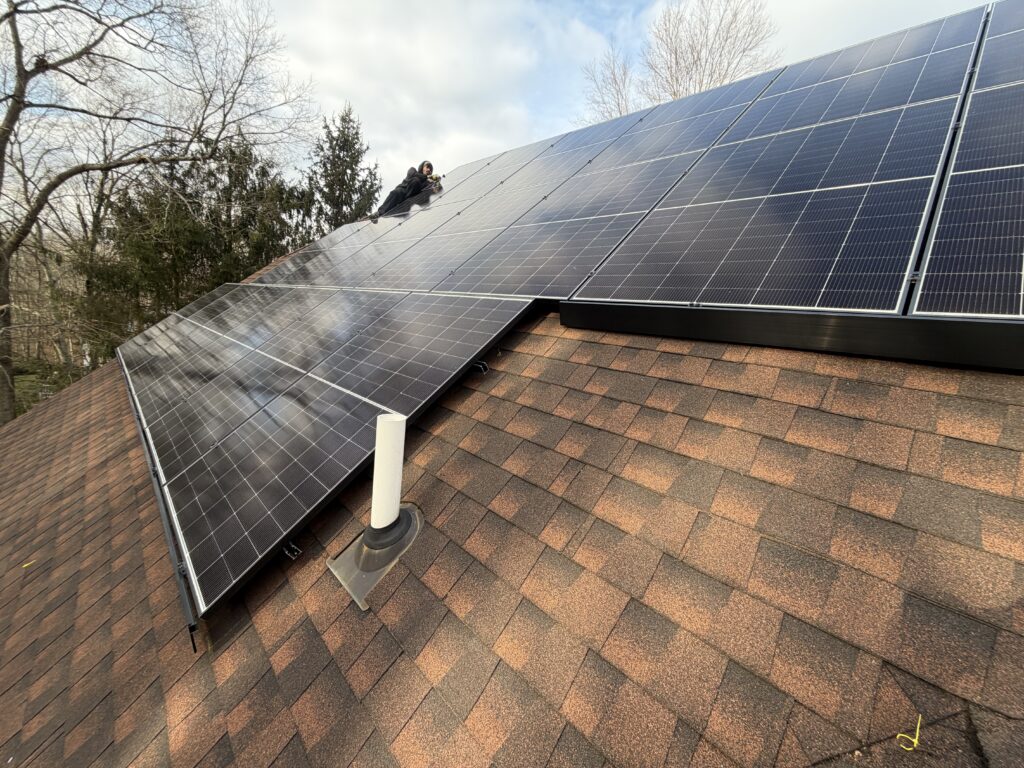
On asphalt shingle roofs, most residential crews end up choosing between two approaches: rails or no rails. Railless solar mounting has become a popular choice because it means fewer components and a cleaner roof finish. Rails still earn their place on some jobs. This guide compares TRT’s two shingle systems, the TRT01 Rail-less Base System and the TRT02 Rail Base System, so you can pick the right one for each roof, array and crew.
What Railless Solar Mounting Means
In a rail system, the roof attachments carry long aluminum rails and the modules clamp to those rails. In a railless system, the modules clamp to bases fastened to the roof, with no long rails running under the array.
The TRT01 Rail-less Base System integrates the base and a mini-rail into a single unit, with adjustable installation height and double butyl adhesive for attachment. The TRT02 Rail Base System uses a cast aluminum rail base that adheres to the roof with butyl adhesive and EPDM rubber, and clip-on rail fasteners connect the base to TRT rails. For both systems, follow the current TRT installation manual for every installation condition.
Rail vs Railless Solar: Side-by-Side Comparison
Both systems are designed for asphalt composition shingle, and both are UL 2703 Listed. They differ in how the array goes together, which modules fit and how you manage wiring.
| Factor | TRT01 Rail-less | TRT02 Rail |
|---|---|---|
| How modules mount | Clamped to bases that integrate a mini-rail, with adjustable installation height | Clamped to TRT aluminum rails |
| Roof attachment | Double butyl adhesive | Butyl adhesive and EPDM rubber in the rail base |
| Wire management | See the TRT01 installation manual | Integrated in the rail cavity, with TRT cable clips and wire caps |
| Module fit | Accepts larger modules than TRT02. Confirm all limits in the datasheet. | Confirm all limits in the datasheet. |
Where Railless Solar Mounting Wins
Fewer parts on the truck and the roof
With TRT01 there are no long mounting rails to ship, cut, store or carry up a ladder. Fewer parts also means simpler crew training and the same process at every attachment point. Fewer ladder trips cut time at the roof edge, which matters for any crew following OSHA fall protection requirements.
Faster installs on clean, simple arrays
On a straight roof plane with a rectangular array, railless solar mounting skips the rail layout, rail cutting and splicing steps. Crews set bases, place modules and clamp. Labor is a real cost line: NREL’s solar installed system cost analysis tracks installation labor separately from hardware for residential systems.
Room for larger modules
TRT01 accepts larger modules than TRT02, which makes it the first shingle option to check for large-format panels. A module that does not fit TRT02 still has to meet every TRT01 requirement for size, frame, clamp and bonding before you spec it. Check the module against TRT’s compatibility requirements before you quote.
A clean roof finish
TRT01 gives a cleaner roof finish, and the skirt finishes the front edge of the array. Homeowners notice, and so do the neighbors who become your next leads.
When a Rail System Like TRT02 Is the Better Call
Rails make sense when the job is less straightforward. Consider TRT02 when:
- The array is broken up. Arrays that step around vents, chimneys or skylights are often easier to keep aligned on continuous rails.
- You want wiring in the rail. TRT02 has integrated wire management in the rail cavity, and TRT cable clips keep conductors from slipping out. Follow electrical code requirements for every run.
- Your crew runs rails every day. If your team is trained and fast on rails, the speed gap narrows, and TRT02’s clip-on rail fasteners keep rail installs quick.
How to Choose: A Quick Checklist
Run each shingle job through these questions before you quote:
- Does the module meet TRT’s compatibility requirements for TRT01, TRT02 or both? Check size, frame and clamp limits, not just length.
- Is the roof plane clean and the array a simple rectangle? Railless usually wins.
- Does the array step around obstructions? Lean toward rails.
- How will you route conductors, and what will your AHJ expect to see?
- What attachment spacing does the site need for its wind and snow conditions?
That last question is never a field estimate. Use TRT’s engineered span tables for base and rail spacing, and include project-specific stamped documentation when your AHJ requires it. For roof attachment tips, see our composition shingle solar mounting best practices.
Not sure which system costs less on a given roof? Model it both ways in TRT’s online BOM design tool, which walks you through the layout and generates a materials list, then compare before you send the quote.
What About Tile Roofs?
TRT01 and TRT02 are built for composition shingle. For tile, the TRT03 Tile Hook System offers three tile hook variants for different tile profiles, covering flat tiles and W or S-shaped tiles, and attaches to TRT rails with integrated wire management. It is UL 2703 Listed and maintains the fire resistance rating of the existing roof. Verify your tile profile against the TRT installation manual before ordering, and take hook spacing from the span tables for that variant.
Choose the Right System for Your Next Shingle Job
Railless solar mounting is the leaner choice for clean shingle roofs and larger modules that meet TRT01’s requirements. Rails are the better fit for broken-up arrays and crews who want wiring in the rail. Both systems are UL 2703 Listed, but they use different base and attachment designs, so check each system’s own documentation. Pull the span tables, run the BOM tool, and contact the TRT team for pricing or distributor availability.
Frequently Asked Questions
What is railless solar mounting?
Railless solar mounting clamps the modules to bases fastened to the roof, with no long rails under the array. On asphalt shingle, the TRT01 Rail-less Base System integrates the base and a mini-rail into one unit, with adjustable height and double butyl adhesive.
Is railless solar mounting faster to install than rails?
On clean, rectangular arrays it usually is, because there are fewer components and no rails to cut or splice. On arrays that step around obstructions, a rail system like TRT02 can be just as efficient and easier to keep aligned.
When should I use rails instead of railless solar mounting?
Use rails (TRT02) for broken-up arrays or when you want wiring managed in the rail cavity. Use railless (TRT01) for clean rectangular arrays, as long as the module meets TRT01’s compatibility requirements. Either way, take spacing from TRT’s span tables.