When you submit plans for a rooftop solar project, the one line that often gets the most attention from reviewers isn’t about wind or snow load.
It’s a UL 2703 solar mounting.
Everyone knows it’s important, but what it actually covers, and how to prove your system complies, is where confusion starts. If you’ve ever had a plan kicked back for “missing UL 2703 documentation,” this guide is for you.
At TRT, we spend a lot of time helping installers, engineers, and plan reviewers make sense of this. Below we break down what UL 2703 really means, what documents inspectors expect, and how to avoid unnecessary delays.
| TL;DR UL 2703 solar mounting = proof of bonding, grounding, and fire class for your array. Plan reviewers need the exact module – racking pairing: attach the UL 2703 listing matrix and, if needed, a TRT compliance letter. Add correct fire-class notes, setbacks, and clearances. Verify pairings up front and you’ll usually pass the first review; TRT01/02 have integrated bonding (no jumpers). |
What UL 2703 Solar Mounting Really Covers
UL 2703 is the standard that ties together bonding, grounding, and fire classification for solar mounting systems.
In plain language: it proves that your racking system, when used with specific modules, will stay electrically continuous, safely grounded, and meet the proper fire-rating when installed on a tested roof type.
So when you see a racking product listed to UL 2703, it means a few important things:
- The hardware maintains bonding and grounding through every connection point, no separate copper wires or jumpers.
- The system has been tested for mechanical loading and fire spread as a complete unit, modules, clamps, and roof covering together.
- And the tested results are summarized in what’s called a listing matrix, basically, a compatibility chart showing which module models are approved with that racking.
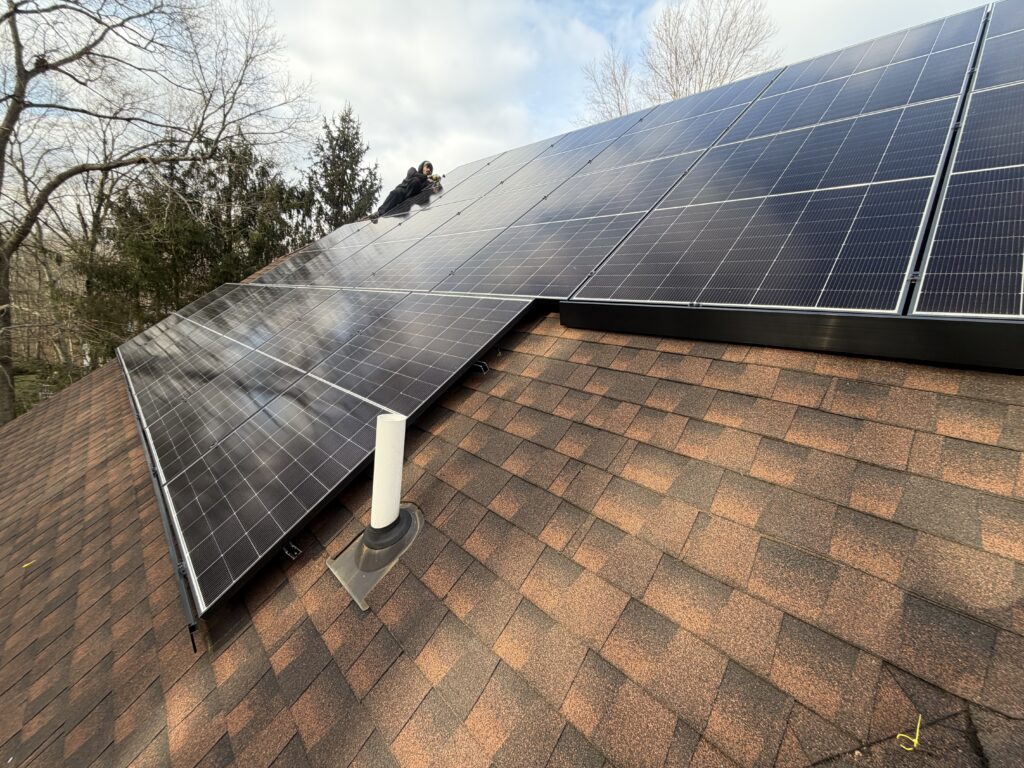
For TRT systems like the TRT01 rail-less base, TRT02 rail base and TRT 03 tile hook system, UL 2703 certification verifies that bonding happens automatically through clamps and bases.A clean, integrated system that inspectors recognize immediately.
If you’re new to the process, you can also check out our post on Solar Attachment Spacing and ASCE 7-22.
It’s a solid companion to this topic because the spacing data you use in your layout directly ties back to how your UL 2703 system was tested.
Why Compatibility Matters
One of the most common causes of permit delays is incompatible module pairings.
Even though your racking may be UL 2703 certified, not every module on the market is automatically included in that listing.
Each UL 2703 file includes a matrix of tested combinations, showing exactly which module frames, clamps, and roof materials were verified together. If your module isn’t there, the AHJ will likely ask for clarification.
That’s why we always tell designers to verify compatibility before submitting. If your preferred module isn’t listed, TRT can review its frame specs and issue a compliance letter confirming compatibility. This saves weeks of back-and-forth with plan reviewers.
We actually covered a related topic in our guide on How to Avoid Solar Permit Rejection. It goes deeper into what inspectors look for, UL documentation is usually reason #1 for correction notices.
So, don’t wait for that email from the AHJ. Send us your module make and model early, and we’ll check it against the UL matrix for you.
Fire Class and What Inspectors Look For
UL 2703 testing doesn’t just prove grounding, it also establishes fire classification for the system.
Inspectors typically look for three things in your plans:
- The correct fire-class statement for example, “System listed to UL 2703, Class A on Type I composition shingle roofs.”
- Setback notes, distances from ridges and hips per local fire codeClearance above roof deck to maintain airflow and reduce temperature rise.
If you include those lines in your plan set, you’ll answer most of what AHJs ask about fire performance.
For TRT01 and TRT02, all fire-class configurations for composition shingles are already covered in the listing, so you can reference that directly without guessing.
What to Include in Your Submittal Package
Most permit delays come down to missing paperwork.
Here’s what you should always attach when submitting a system built with UL 2703-listed racking:
- The UL 2703 listing matrix showing your exact module and system combination.
- A compliance letter, if your module isn’t yet listed.
- The current installation manual referencing UL 2703 and grounding method.
- Spec sheet or label sample with the UL file number.
- Optionally, a simple one-page bonding diagram showing electrical continuity.
These few pages make a huge difference. They show the reviewer that you’ve done your homework and that the system was designed and tested as a unit, not pieced together in the field.
Both TRT01, TRT02 and TRT 03 series come ready for this kind of documentation. The integrated bonding hardware eliminates the need for separate grounding conductors, and all load testing follows ASCE 7-22 principles.
See UL’s PV Mounting Systems Certification page for details on documentation and installation-manual requirements tied to UL 2703 listings.
If you want us to verify your documents, send them with your plan set draft. We can confirm everything aligns with our UL listing before you hit submit.
Always reference TRT PE-stamped span tables for load verification. Do not perform or publish your own structural calculations in plan sets, TRT provides certified documentation for that.
How to Verify Compatibility Before You Submit
Before you upload your plan set, take five minutes to check these points:
- Find your module’s exact model number, not just the brand or series.
- Open the latest TRT UL 2703 matrix (we update it quarterly).
- Make sure your module model and frame depth appear on the list.
- If not, request a compliance letter, we’ll confirm and add it if needed.
- Add both documents to your plan submittal under “Manufacturer Certifications.”
That small step keeps your project moving. It’s the same approach discussed in our article on Fast Solar Installation Racking, where we explain how upfront verification cuts field delays later.
Doing this up front means your project clears review the first time, no waiting, no corrections, no guessing what the AHJ wants.
FAQs
What if my module isn’t on the matrix yet?
Just check the datasheet, if the frame dimensions and clamp interface, and if it’s compatible.
Do I need bonding jumpers with rail-less systems?
No. For TRT01 and TRT02, bonding jumpers are not required. The system uses integrated bonding through clamps and bases, so electrical continuity is maintained at every connection point without separate jumpers, washers, or extra wires. This is verified under UL 2703 testing and is one of the key installation advantages of TRT rail-less and rail base systems.
Final Notes and Next Steps
The takeaway is simple: UL 2703 is about showing proof, not just saying “listed.”
If your documents clearly match the racking, module, and fire-class conditions of the UL test, your plan will almost always pass review on the first round.
TRT systems are designed for fast installation without flashing, pilot holes, or silicone sealant, and supported by PE-stamped calculations when needed.
Before you submit your next plan, take a moment to verify compatibility, or send us your details and let us confirm it for you.
Ready to confirm your module pairing? Contact TRT for a compliance review before you submit.
“This article is for marketing purposes only and does not constitute any engineering advice. Readers should consult with a professional engineering institution and take sole responsibility for their project design and application.”